Introduction: This article focuses on a high-availability access solution in Taiwan that combines Taiwan Telecom’s CN2 broadband with cloud servers. It systematically explains the network characteristics, key architectural aspects, and operational practices, aiming to help technical teams design stable, low-latency online services with disaster recovery capabilities.
Taiwan Telecom’s CN2 broadband typically offers superior backhaul routes and a lower packet loss rate, making it suitable for cross-border access scenarios. Understanding its link redundancy, bandwidth elasticity, and latency performance helps in formulating appropriate cloud deployment strategies and SLA targets.
The CN2 link is highly beneficial for latency-sensitive services such as real-time communication and financial transactions. Combined with cloud servers, it enables traffic to be routed locally, optimizing paths and providing a more stable connection experience, thereby improving the availability and response speed of user access.
When designing a high-availability solution, four principles should be followed: redundancy, partitioning, minimal impact, and automated recovery. Through multi-availability zone deployment and cross-link redundancy, it ensures that single points of failure do not cause service unavailability, thereby enhancing the overall resilience of the system.
It is recommended to use multiple access lines combined with intelligent load balancing to distribute traffic to different cloud hosts or links based on policies. This not only balances the load but also enables traffic switching in case of a single-line failure, ensuring continuity of access.
Configuring BGP multi-exit and implementing routing priority and policy control can prevent congestion on a single path. Combining real-time link monitoring with routing strategy adjustments helps to maximize the low-latency advantages of the CN2 link.
When choosing a cloud host, factors such as region, availability zone, network bandwidth, and scalability should be considered. Proper calculation of resource allocation and network resources, combined with CN2 access point deployment, can maintain service stability during peak traffic times and reduce latency fluctuations.
Instance specifications are tailored for different business types, with network performance and I/O capabilities given priority in the front-end and caching layers. By distributing instances across availability zones and designing fault domain boundaries, the impact of regional failures on the overall service is reduced.
Implementing fine-grained health checks and automatic recovery (such as automatic restarts, traffic switching, and elastic scaling) can significantly reduce fault recovery time. Combine alerts with runbooks to improve operational response efficiency and observability.
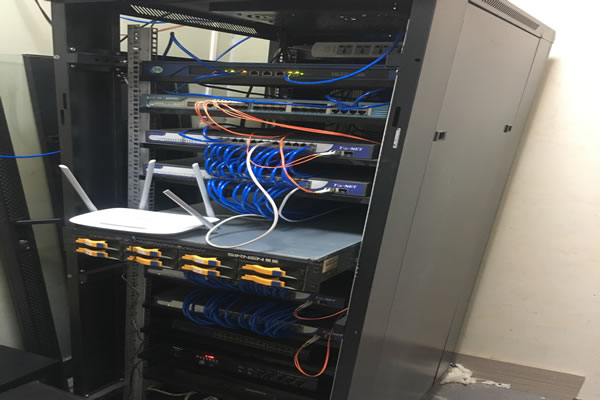
High-availability access depends not only on links and hosts but also requires fault tolerance design at the application layer. The application should support stateless scaling, session migration, or shared storage to smoothly migrate requests when nodes go offline, ensuring a good user experience.
Deploying CDN and edge caching near the user side can significantly reduce cross-border traffic and improve hit rates. Properly configure caching strategies and static resource distribution to reduce the load on the origin server and improve overall response speed and availability.
Combine edge cleaning, traffic throttling, and WAF strategies to protect services from attacks. Regularly conduct attacks and disaster recovery drills to ensure that the system can automatically recover and maintain basic availability in the event of abnormal traffic or attacks.
A comprehensive monitoring system should cover link, host, application, and user experience metrics. Achieve observability through logs, metrics, and trace tracking, and combine it with automated scripts to reduce risks and recovery times caused by human errors.
Summary: By combining Taiwan Telecom’s CN2 broadband with cloud servers, low-latency and highly available access can be achieved through multi-line redundancy, BGP optimization, load balancing, cross-regional deployment, and CDN caching. It is recommended to conduct link evaluation and stress testing first, establish disaster recovery and operation procedures, and continuously optimize routing and monitoring strategies to ensure the stability and reliability of online services.
- Latest articles
- Popular tags
-

Seven Key Points For Choosing A Taiwan CN2 VPS To Improve Cross-border Access Stability
This article systematically explains how to choose a Taiwan-based CN2 VPS to improve the stability of cross-border access, based on seven key points. It covers practical recommendations such as network connections, data center locations, bandwidth and quality, operator interconnections, as well as security and availability. -

-

Why Choose Taiwan CN2 Line As Your Server Solution
This article discusses why Taiwan CN2 line is chosen as your server solution, and analyzes its advantages such as network stability, high-speed connection and high-quality service.